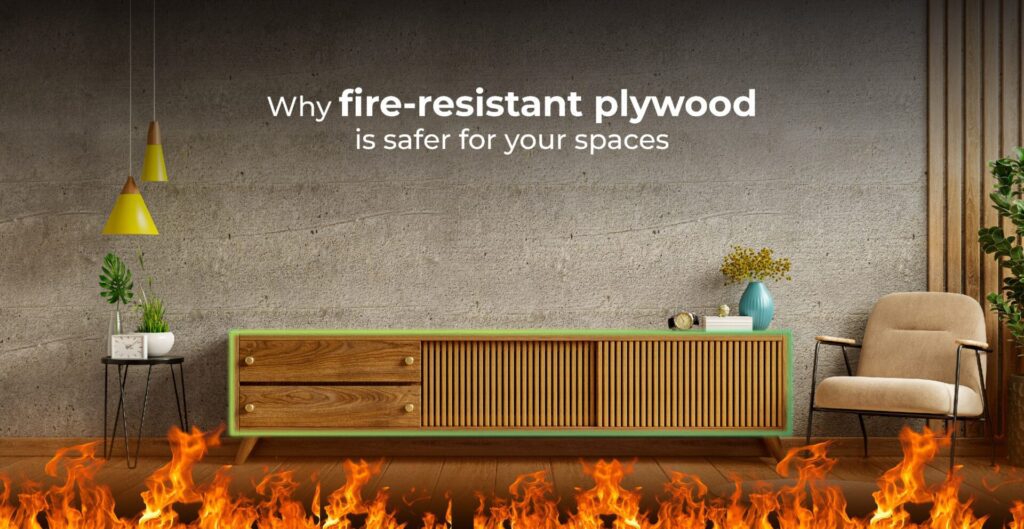
When it comes to choosing materials for building safe, secure, and long-lasting spaces, be it homes, offices, or commercial interiors, fire resistant plywood stands out as a smarter and more reliable option. It not only helps slow down the spread of fire but also offers better structural integrity during emergencies. If you are serious about safety, this type of plywood should be on your radar.
Table of contents
What Is Fire-Resistant Plywood and How Does It Work?
Fire resistant plywood is specially treated with fire-retardant chemicals that reduce its flammability. Unlike regular plywood, it is designed to withstand high temperatures for a longer duration, giving occupants extra time to evacuate and first responders more time to act. This makes it ideal for areas with high fire risk or spaces that need to follow strict building codes and safety standards.
The plywood is manufactured through a unique treatment process that infuses the wood with fire-retardant compounds. These chemicals don’t just coat the surface—they penetrate deep into the core, making the plywood more resistant to ignition and slowing the rate at which flames can spread.
Benefits of fire resistant plywood for your spaces
1. Enhanced safety in emergencies
The biggest advantage is that it reduces the chance of fire-related disasters. Whether it is in kitchens, electrical panels, or public buildings, this plywood acts as a protective barrier. In a fire outbreak, it does not contribute to the flames as quickly as untreated wood would.
2. Meets building code requirements
For commercial projects and residential buildings, local safety codes often mandate the use of fire-retardant materials. Using this plywood ensures compliance with these regulations, which is crucial for project approval and long-term safety assurance.
3. Added structural integrity
During fire incidents, untreated wood often loses strength rapidly. Fire resistant plywood, however, maintains its shape and structure longer, preventing ceilings or partitions from collapsing instantly. This additional strength can reduce property damage and give people crucial time to react.
4. Ideal for high-risk areas
Spaces like kitchens, server rooms, storage units, and public places are more vulnerable to fire hazards. Installing fire resistant plywood in these spaces minimizes the fire load and enhances safety without compromising on durability or aesthetics.
5. Long-term investment
While the upfront cost of this plywood may be slightly higher than that of regular plywood, the long-term benefits easily outweigh the price. From reduced insurance premiums to better property valuation and fewer renovation costs after incidents, it proves to be a wise investment.
Where can you use fire resistant plywood?
Fire resistant plywood is versatile and can be used in both residential and commercial settings. Common applications include:
- Constructions and interiors, such as wall paneling, false ceilings, and partitions
- Kitchen cabinets and modular units
- Public transport interiors (like buses or trains)
- Auditoriums and theaters
- Schools, hospitals, and government buildings
Its durability and fire-retardant properties make it an ideal choice for areas where safety cannot be compromised.
How to identify genuine fire resistant plywood
Not all fire-resistant plywood is created equal. When purchasing, make sure to check:
- Certifications and Standards: Ensure it meets IS 5509 or other fire safety standards.
- Labelling: Look for clear labeling about the fire-retardant treatment used.
- Smell and Texture: Treated plywood often has a slightly different smell and may feel denser.
- Supplier Credibility: Always buy from trusted brands that are known for quality assurance and transparent manufacturing processes.
To ensure you are investing in the right product, ask for a test report or compliance certificate from the manufacturer. A reliable supplier will always be transparent about product specifications.
Tips for installing fire resistant plywood
Even the best material can underperform if not used properly. Here are some installation tips:
- Use appropriate hardware for mounting and fixing to avoid compromising its fire-resistant nature.
- Seal edges properly to prevent exposure to moisture, which can reduce fire-retardant effectiveness.
- Avoid painting over it unless using fire-rated paint products approved for such surfaces.
- Keep regular checks during maintenance cycles to ensure the plywood remains intact and free from damage or deterioration over time.
Proper handling, installation, and periodic maintenance are key to ensuring your plywood performs at its best when it matters most.
Eco-friendly and safe: A win-win combination
Many modern fire resistant plywood options are manufactured using eco-conscious methods and low-emission adhesives. This means you can keep your indoor air quality safe while protecting against fire risks. So, you don’t just protect your property—you also protect the environment and your loved ones from harmful chemicals.
More than that, some manufacturers are now offering zero emission plywood, making your spaces even safer from both fire and toxic emissions. It is about building safer homes and greener futures.
Build safer with fire resistant plywood
In today’s fast-paced world, where safety can not be taken for granted, making the switch to fire resistant plywood is a proactive step towards smarter construction. Whether you are designing a home or a commercial facility, choosing materials that can stand up to emergencies is non-negotiable. With its wide range of benefits, from safety and durability to regulatory compliance, fire-resistant plywood is more than just a product; it is peace of mind built into every panel. Trusted brands like SharonPly ensure that every sheet is manufactured to the highest standards of safety and quality, helping you build not just beautiful, but safer spaces that stand the test of time.