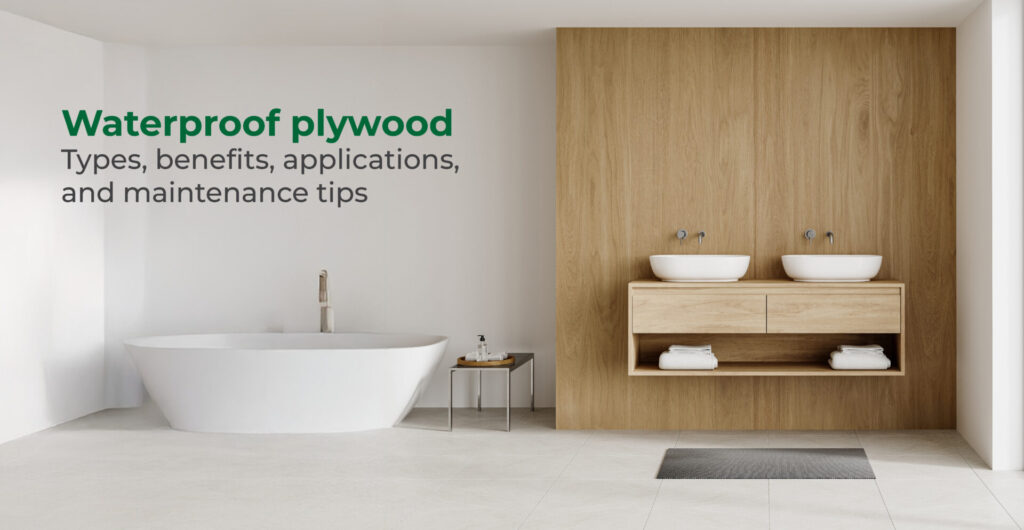
When you think about building something that lasts, be it kitchen cabinets, outdoor furniture, or bathroom storage, the material you choose makes all the difference. One name that continues to stand out for such durability is waterproof plywood. Whether you are a homeowner seeking long-lasting solutions or an interior designer looking for dependable materials, waterproof plywood provides peace of mind.
In this blog, we will walk you through everything you need to know: the types, advantages, uses, how it compares to other plywoods, and tips for choosing and maintaining it. We will also bust some common myths that often surround this material. If you are curious about waterproof plywood and how it can benefit your next project, you are in the right place.
Waterproof plywood is not one-size-fits-all. It comes in a few different variants, each tailored to specific needs:
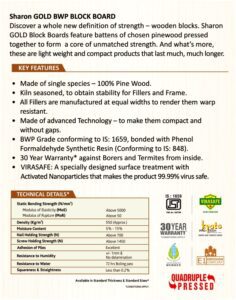
BWP, commonly known as marine plywood, is the strongest variety of waterproof plywood. It can withstand constant exposure to water, making it ideal for use in kitchens, bathrooms, outdoor decks, and marine applications, such as boat interiors.
This type of plywood is especially useful in scenarios where it might be subjected to boiling water or prolonged water exposure. Whether it is in the form of hot liquid spills in a kitchen or steam in a bathroom, BWP plywood stands up to the challenge.
While BWR grade plywood resists moisture, it doesn’t offer complete waterproofing like BWP does. It is suited for interiors where occasional water exposure occurs, such as modular kitchens, wardrobes, and office partitions.
Many choose BWR plywood for its practical balance of affordability and durability. It is the go-to choice for areas that may occasionally get wet but are not constantly exposed to moisture.
Marine plywood is often used interchangeably with BWP, but technically, it adheres to stricter manufacturing norms. It is used in shipbuilding, outdoor furniture, and other high-moisture environments.
The use of marine plywood is critical in applications that demand the utmost reliability in wet conditions, such as the construction of boats and docks.
Though not always associated with waterproofing in the same sense as BWP, shuttering plywood is used in concrete formwork and construction, where it gets exposed to water and pressure.
This type of plywood is engineered to withstand the rigors of construction environments, where it supports concrete until it sets and is exposed to the elements.
Knowing these types helps you choose the right material for the job, avoiding unnecessary expenses and ensuring longevity.
Waterproof plywood comes with a range of benefits that make it a smart investment, not just an aesthetic choice.
One of the primary advantages is its ability to resist water damage. While regular plywood warps or swells over time, waterproof plywood retains its shape and strength for years to come. Its durability comes from the high-quality adhesives and resins used in its construction, ensuring that it remains intact even under challenging conditions.
Thanks to high-quality bonding resins and selected hardwood veneers, waterproof plywood offers excellent load-bearing capacity and structural integrity. It supports shelves, furniture, and partitions without sagging. This strength makes it ideal for both residential and commercial applications where reliability is a priority.
You can use it in virtually every part of the home, be it in the bathrooms, kitchens, rooftops, and even exterior walls. It is equally dependable in commercial spaces, such as cafes, schools, and hospitals. This versatility stems from its resistance to environmental factors that could otherwise compromise the integrity of regular plywood.
In humid environments, fungal growth is a common occurrence. Waterproof plywood resists moisture accumulation, reducing the likelihood of decay, mold, and bacterial growth. This resistance is crucial for maintaining a healthy indoor environment, especially in spaces prone to dampness.
Unlike some materials that need extensive upkeep, waterproof plywood is easy to clean and maintain. Occasional wiping and proper sealing keep it looking fresh and damage-free. Its low maintenance requirements make it a practical choice for busy households and commercial settings.
For an in-depth perspective on the lasting value of these advantages, check out our blog on Understanding the Benefits of Waterproof Plywood.
The true test of waterproof plywood lies in how it performs in everyday use. Its applications span across:
Cabinets, under-sink storage, and wardrobes in wet zones benefit from BWP or BWR plywood, as they are exposed to frequent splashes and humidity. These areas require materials that can withstand direct contact with water without deteriorating.
Garden chairs, swings, benches, and outdoor tables need to withstand rain and sun. Marine-grade waterproof plywood is the ideal pick here. Because it withstands shifting weather conditions, it’s a preferred choice for crafting outdoor furniture.
Shops, salons, and restaurants prefer waterproof plywood for its clean finish and resistance to spills or moisture-laden environments. Its long-lasting strength helps preserve both looks and utility, even in areas that face heavy use.
Prefabricated modular kitchen units and wardrobes are often made using BWR plywood. It ensures longevity while maintaining a flexible design. Its adaptability allows for creative designs without sacrificing durability.
False ceilings and decorative panels made of waterproof plywood don’t deform easily, making them ideal for areas with AC vents or zones prone to leakage. Its stability contributes to a neat and professional finish in architectural designs.
To understand its performance and benefits in exterior applications, read our blog on everything you need to know about waterproof plywood for outdoors.
It’s a common misconception that all plywood is alike, but waterproof plywood stands apart with key differences from regular variants.
| Feature | Regular Plywood | Waterproof Plywood |
| Water Resistance | Low | High |
| Use in Wet Areas | Not Recommended | Ideal |
| Longevity | 3-5 years | 10-15 years or more |
| Cost | Lower | Higher but value for money |
| Fungus/Mould Resistance | Low | High |
| Application | Dry interiors | Wet/dry indoor and outdoor |
So while regular plywood might seem cost-effective initially, the savings don’t last. Waterproof plywood pays off in the long run by reducing repair or replacement costs.
Learn more about its role in preventing long-term damage by visiting our blog on How waterproof plywood shields interiors from water damage.
Here are a few quick checks to help you pick the right product:
Selecting the appropriate type based on the specific environment ensures that you maximize the performance and lifespan of the plywood.
Check for IS:710 for marine-grade waterproof plywood or IS:303 for BWR. These certifications confirm adherence to Indian quality benchmarks, assuring dependable performance.
Good plywood uses hardwood core veneers. Avoid cheaper versions made of softwood or mixed waste timber. The quality of the core material significantly affects the overall durability and strength of the plywood.
Phenol-formaldehyde resin leaves a mild chemical smell. Also, ensure the surface is smooth, with no patches, gaps, or core overlaps. These factors indicate the quality of the manufacturing process.
Choose a trusted brand that is recognized for consistent quality and lasting strength. Trustworthy brands also provide warranty and after-sales support. Investing in a reputable brand minimizes the risk of defects and ensures value for money.
If you are constructing a house, understanding these checks will help you see why choosing waterproof plywood is essential for your modern home design.
Even though waterproof plywood is resilient, regular care increases its life:
Apply a waterproof edge sealant or laminate to exposed corners. Moisture seeps in from poorly sealed edges, which can compromise the integrity of the plywood over time.
Avoid harsh chemicals. A damp cloth with mild soap is more than enough for cleaning surfaces. This gentle cleaning method prevents damage to the surface finish.
Every 6 months, check for small cracks, surface bubbling, or colour change. Early detection helps prevent major damage. Routine inspections allow you to address minor issues before they escalate.
Waterproof does not mean flood-proof. Don’t leave plywood soaked in water for extended periods. While it can handle moisture effectively, excessive exposure can still cause issues.
A layer of polyurethane or a laminate sheet can protect it from external elements, such as heat, water, and scratches. Protective coatings not only improve the plywood’s strength but also add to its visual appeal.
Let’s clear the air on a few misconceptions:
Truth: It is highly resistant but not invincible. Continuous submersion can still cause gradual damage. Use protective finishes to enhance performance.
Truth: There’s a clear distinction between BWP, BWR, and standard plywood types. Always check the IS grade and brand specs to ensure you are getting the right product.
Truth: Waterproof plywood is versatile enough for outdoor furniture, office use, decorative panels, and even temporary structures. Its applications extend far beyond just wet areas.
Truth: While premium brands cost more, the longevity and reduced maintenance make them economical in the long term. The upfront investment is offset by the durability and performance benefits it provides.
Waterproof plywood has become the material of choice for builders, designers, and homeowners seeking structures that are durable and resistant to water-related damage. Whether you are working on a home renovation, a commercial project, or modular interiors, knowing which type of waterproof plywood to use and how to maintain it gives you a serious edge.
When performance matters, and you don’t want to compromise on quality, SharonPly offers a trusted range of waterproof plywood solutions—engineered for endurance and crafted with care.
The common types are BWP (Boiling Water Proof), BWR (Boiling Water Resistant), Marine Grade, and Film-Faced Shuttering plywood. Each serves different levels of water exposure needs.
Durability, water resistance, low maintenance, fungus resistance, and versatility in applications are key benefits. It is ideal for high-moisture areas.
BWP is ideal for areas exposed to constant moisture, like kitchens and bathrooms, due to its superior water resistance. BWR is suitable for interiors with occasional water contact. By understanding the types, benefits, and applications of waterproof plywood, you can make informed decisions for your next project.

Users understand that SHARONPLY is committed to protecting the User’s privacy and shall take all efforts to protect any personal data provided to the Website by reasonable security safeguards against such risks as loss or unauthorised use, destruction, modification or disclosure of data, However, in case of any lapse, SHARONPLY shall not be held responsible for any effect or consequences thereof. The Website uses cookies to track usage of the path of the User. Since most web browsers automatically accept cookies, User can edit User’s browser options to block them if User does not want the Website to use cookies to track usage of the path of the User.
SHARONPLY undertakes not to disclose, except as otherwise provided, the personal information provided by the User to any person, unless such action is necessary to: –
By filling up any form on the Website User automatically grants SHARONPLY a royalty-free, perpetual, irrevocable non-exclusive license to use, reproduce, publish, edit, distribute, and publicly display the information given in the form and to sublicense such rights.
Any queries regarding the SHARONPLY’s privacy policy, may be sent to admin@sharonply.com.