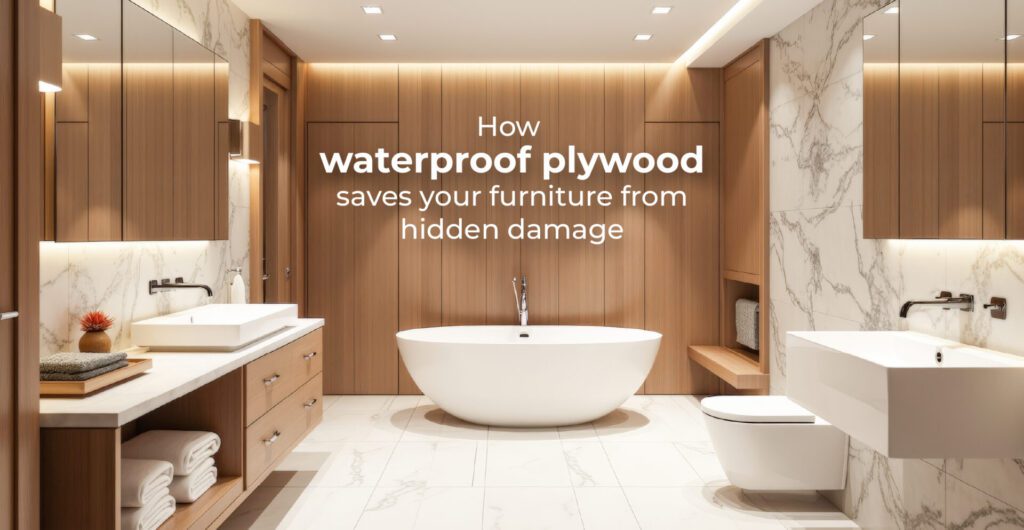
You have invested in beautiful new cabinets, a sleek bathroom vanity, or a custom-made bookshelf. At first, everything looks flawless. But slowly, an invisible enemy begins to work against you: moisture.
It is not the accidental spills that cause the most trouble—those can be wiped away. The real danger comes from persistent, hidden dampness that creeps into your furniture over time. It might start with a musty smell, a warped cabinet door that won’t close properly, or joints that begin to loosen. By the time you notice, the damage is already done.
This is why your choice of building material is critical. Ordinary plywood is not equipped to handle constant exposure to water or humidity. Waterproof plywood, on the other hand, is engineered to resist these hidden threats. More than just wood, it is your strongest line of defense against moisture damage, mold, and even pests.
Table of Contents
What makes waterproof plywood different?
When we say “waterproof,” it does not mean you can submerge plywood in water indefinitely. Instead, it means that the plywood is highly resistant to water damage thanks to its unique construction. Regular plywood is bonded with standard adhesives that weaken when wet. Waterproof plywood, however, uses superior resins and water-resistant adhesives that form a powerful barrier. This prevents moisture from seeping into the layers of the wood and keeps your furniture structurally sound. In fact, many homeowners choose waterproof plywood for their modern home design.
Think of it like the difference between a sponge and a shield. While normal plywood absorbs water like a sponge, waterproof plywood repels it, ensuring long-lasting performance.
How does waterproof plywood protect your home?
One of the most obvious benefits of waterproof plywood is its ability to prevent swelling and warping. In humid spaces like kitchens and bathrooms, ordinary plywood tends to expand unevenly, which makes drawers stick and cabinet doors misalign. Waterproof plywood blocks this process, maintaining smooth lines and usability for years.
It also helps safeguard your family’s health. Damp environments are perfect breeding grounds for mold and mildew, both of which can compromise indoor air quality. By keeping moisture out, waterproof plywood removes the conditions that allow fungi to thrive, ensuring your home stays hygienic and fresh. This protective quality is how waterproof plywood shields interiors from water damage.
Another important advantage is protection against rot. Prolonged dampness can weaken ordinary plywood to the point of collapse, especially under heavy loads. Waterproof plywood, strengthened with special preservatives, resists structural decay, so your cabinets, shelves, and vanities remain reliable even after years of use.
Why is waterproof plywood a smarter long-term investment?
When choosing materials for your home, it’s tempting to go with standard plywood because of its lower cost. But what looks like savings today can quickly turn into expensive repairs tomorrow. Imagine having to replace an entire kitchen cabinet set or bathroom vanity because of water damage; both the material and labor costs can far exceed the initial difference in plywood prices.
Waterproof plywood prevents this cycle of damage and replacement. Its ability to resist moisture, mold, and pests ensures that furniture built today continues to perform well for years, making it a cost-effective choice in the long run. Beyond money, it also saves you the hassle and disruption of constant repairs. In short, waterproof plywood is not just about protecting furniture, but it’s about protecting your investment, your time, and your peace of mind.
Where does waterproof plywood make the biggest difference?
Consider a slow leak under your kitchen sink. With regular plywood, the base of the cabinet would absorb water until it eventually softens, warps, and begins to rot. Waterproof plywood gives you the time to notice the issue and fix it before irreversible damage occurs.
In bathrooms, constant exposure to steam from showers often leads to weakened joints and fuzzy edges on vanities. Waterproof plywood withstands these humid conditions, preserving both appearance and durability. Even in semi-outdoor spaces like balconies or basements, where dampness is unavoidable, this material remains stable and dependable.
As an added bonus, many varieties of waterproof plywood are chemically treated to resist pests. Termites and borers are drawn to moist, decaying wood, but waterproof plywood creates a dry, protected environment that naturally repels them.
When should you use waterproof plywood in your home?
While it comes at a higher cost than standard plywood, waterproof plywood is non-negotiable in certain areas of your home. It is especially recommended for kitchen cabinets and islands that face spills and steam, bathroom vanities that are exposed to constant humidity, and laundry room storage that sits close to water sources. It is also ideal for basement furniture and semi-outdoor spaces where dampness is unavoidable. For wardrobes and shelving in dry, climate-controlled rooms, standard plywood may suffice, but in moisture-prone spaces, investing in waterproof plywood is a smarter long-term choice. Depending on your needs, you can also explore the different types, benefits, and applications of waterproof plywood to select the right option for each part of your home.
Build with confidence, not worry
Choosing materials for your home can feel overwhelming, but some decisions are clear. Waterproof plywood is not just about durability—it’s about protecting your furniture, your investment, and your family’s health. It gives you the peace of mind that your cabinets won’t warp after a humid summer, that your bathroom vanity will stand strong for years, and that a small leak won’t silently destroy your furniture. When you choose Sovereign Waterproof Plywoodfrom SharonPly, you are not just buying a product; you are securing the safety and longevity of your home.