

In modern homes, comfort is no longer defined only by soft couches, warm lighting, and beautiful decor. It also includes something you cannot see but immediately feel: acoustic comfort. Whether it is the quiet needed to focus in a work-from-home setup, the immersive sound experience of a home theatre, or the simple desire to block out noisy traffic, sound management has become an essential part of interior planning.
While there are many materials that contribute to better acoustics, plywood is one of the most reliable and versatile choices. Its structure, strength, and adaptability make it ideal for creating sound-friendly spaces in Indian homes. But how exactly does plywood help with acoustic comfort? And why are architects and interior designers recommending it more than ever?
Here is a complete guide to how plywood supports sound absorption, sound insulation, and overall acoustic performance in homes.
Before exploring plywood’s role, it is useful to understand what “acoustic comfort” means. In simple terms, acoustic comfort refers to the ability of a space to control unwanted noise and enhance desired sound.
There are two main aspects:
Achieving both is important, especially in urban homes where noise from neighbours, appliances, traffic, and conversations can easily disrupt peace and privacy. This is where plywood becomes a powerful material choice.
The secret lies in plywood’s construction. A plywood sheet is made by bonding together several thin layers of wood veneer with the grains arranged in alternate directions. This cross-laminated structure gives plywood strength, density, and stability—three elements that directly influence how sound behaves.
Plywood’s layered structure helps it absorb mid and high-frequency sounds effectively. This reduces reverberation, making the room sound softer and clearer. That’s why plywood is often used in:
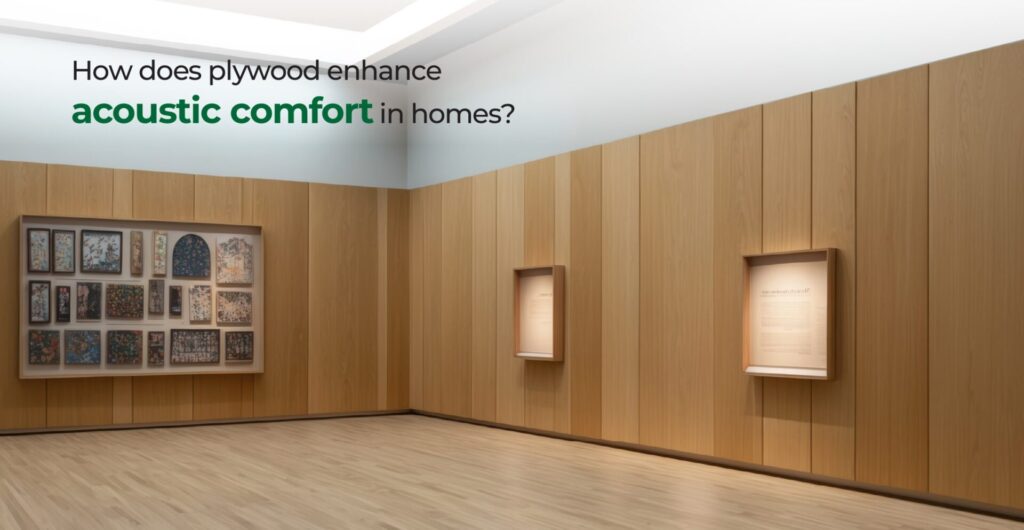
When installed as wall panels or ceiling panels, plywood helps soften harsh sound reflections and reduces echo, creating a more comfortable environment.
Thicker and denser plywood varieties help prevent sound transmission between rooms. When used with insulation materials such as mineral wool or foam, plywood becomes a powerful barrier to external noise.
It performs significantly better than hollow or lightweight boards because of its solid engineering and consistent density.
For specialised acoustic rooms, plywood is often chosen as the base material for:
These treatments work best with plywood because it is easy to machine, resistant to cracking, and maintains its shape even with detailed perforations.
While standard plywood already offers good acoustic performance, acoustic-grade plywood takes it a step further. These specially designed panels feature perforations or grooves that enhance sound absorption.
This is why acoustic plywood is widely used in home theatres, music studios, and premium entertainment rooms.
Plywood wall panels add warmth, style, and acoustic benefits. Panels can be flat, grooved, or perforated depending on the level of sound control required. Even simple plywood cladding can significantly reduce echo.
In rooms with high ceilings or open layouts, sound tends to bounce around. Plywood ceiling panels absorb these reflections and help balance the acoustics of the room. They are popular in:
Solid-core flush doors made with plywood provide far better sound insulation than hollow or lightweight doors. This is especially important for:
Plywood doors help maintain privacy and reduce disturbance, which is a growing need in modern households.
Surfaces like wardrobes, TV units, bookshelves, and modular furniture made with plywood can also help manage sound. The density of plywood absorbs vibrations better than plastic, MDF, or metal furniture.
Plywood is a top choice for building home theatres because it allows:
Whether you’re designing a luxurious entertainment room or a simple media corner, plywood helps enhance sound quality.
In addition to technical performance, plywood improves acoustic comfort in everyday life:
With more people working or studying from home, quiet spaces are essential. Plywood panels and doors help create zones where concentration comes more easily.
Better sound insulation means conversations stay within the room and external noise stays out. Bedrooms, offices, and living areas all benefit from this.
A room with controlled acoustics feels calmer. Whether it’s watching a movie, meditating, or simply resting, plywood helps maintain a soothing environment.
Movies, music, and gaming sound clearer when unwanted echoes are removed. Plywood-based acoustic solutions elevate the overall experience.
Not all plywood performs the same. When choosing plywood for acoustic use, consider:
Combining plywood with insulation materials further improves results, giving your home professional-level acoustics.
Acoustic comfort shapes the way we experience our homes, influencing how we work, relax, and connect. Plywood plays a valuable role in improving sound quality by reducing noise, controlling echo, and enhancing overall clarity. Its natural density and engineered stability make it one of the most dependable materials for creating peaceful and private interiors. When paired with the right design, plywood can elevate everything from home theatres to workspaces. At SharonPly, we craft plywood that supports both acoustic performance and long-lasting durability. With the right material choices, your home can sound as good as it looks.










Users understand that SHARONPLY is committed to protecting the User’s privacy and shall take all efforts to protect any personal data provided to the Website by reasonable security safeguards against such risks as loss or unauthorised use, destruction, modification or disclosure of data, However, in case of any lapse, SHARONPLY shall not be held responsible for any effect or consequences thereof. The Website uses cookies to track usage of the path of the User. Since most web browsers automatically accept cookies, User can edit User’s browser options to block them if User does not want the Website to use cookies to track usage of the path of the User.
SHARONPLY undertakes not to disclose, except as otherwise provided, the personal information provided by the User to any person, unless such action is necessary to: –
By filling up any form on the Website User automatically grants SHARONPLY a royalty-free, perpetual, irrevocable non-exclusive license to use, reproduce, publish, edit, distribute, and publicly display the information given in the form and to sublicense such rights.
Any queries regarding the SHARONPLY’s privacy policy, may be sent to admin@sharonply.com.