
Plywood plays a quiet but crucial role in every home. It supports kitchen cabinets, wardrobes, beds, wall panels, and shelves, shaping the strength and durability of everyday living spaces. Yet, despite its importance, plywood is often the most misunderstood material in home construction and interior work.
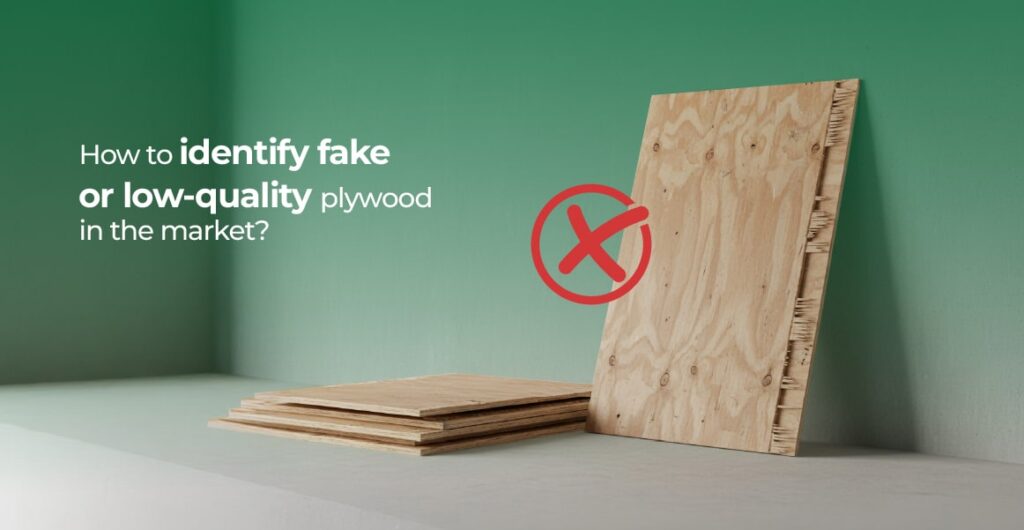
With rising demand, the market has seen a growing presence of fake, mislabelled, and low-quality plywood. Many of these products look convincing at first glance but fail to deliver strength, safety, or longevity. The real challenge is that problems often appear months after installation, when repairs are costly and replacement becomes unavoidable.
The good news is that identifying fake or low-quality plywood does not require technical expertise. With basic awareness and careful inspection, homeowners, contractors, and architects can make informed choices and avoid costly mistakes. This guide explains how to recognise genuine plywood and protect yourself from substandard products.
India’s plywood industry is vast and diverse. While many manufacturers follow strict quality standards, others operate without proper regulation. These unorganised units often produce inferior plywood that is disguised to resemble branded products.
Low-quality plywood is usually made using weak or unseasoned timber, excessive fillers, and poor bonding adhesives. Such sheets may pass visual inspection initially but fail quickly when exposed to moisture, weight, or daily use. Over time, they may warp, crack, delaminate, or even collapse, compromising both safety and aesthetics.
Because the damage surfaces only after installation, many homeowners realise the issue too late. This makes early identification critical.
One of the most reliable ways to identify genuine plywood is by checking its certification. Authentic plywood carries recognised quality marks that indicate compliance with national standards.
Look for markings such as ISI certification codes like IS 303 for commercial plywood or IS 710 for waterproof plywood. These stamps are usually pressed or branded onto the sheet and include the manufacturer’s name, grade, and standard number.
Be cautious if the markings appear printed, incomplete, or unclear. A genuine certification mark is consistent and precise. If a plywood sheet claims to be certified but is sold at an unusually low price, it should raise concern.
The internal structure of plywood reveals a lot about its quality. High-grade plywood consists of multiple layers that are evenly aligned and tightly bonded. When viewed from the edges, these layers appear uniform in thickness and arrangement.
Low-quality plywood often shows gaps, overlaps, or uneven layers. Large hollow spaces or crumbly filler material inside the core indicate poor construction. Such defects weaken the sheet and reduce its load-bearing capacity.
Running your fingers along the edge can help you detect inconsistencies that may not be visible at first glance.
One of the most common ways fake plywood is sold is by masking poor core quality with an attractive outer veneer. While the surface may look smooth and polished, the strength of plywood depends on what lies beneath.
To avoid being misled, look for information about the core material. Plywood made with hardwood, eucalyptus, or gurjan cores generally offers better strength and durability. Sheets that feel unusually light often contain soft fillers or recycled scrap, which reduce lifespan.
Tapping the surface lightly can also help. A hollow or uneven sound may indicate weak internal construction.
While laboratory testing is the most accurate way to assess plywood quality, a few simple on-site checks can offer useful insights.
The boiling water test is commonly used for waterproof plywood. When a small piece is boiled for a few hours, genuine waterproof plywood remains intact without layer separation.
A scratch test can reveal veneer strength. High-quality plywood resists moderate scratching, while fake veneer chips or peels easily.
Bending a narrow strip slightly helps assess flexibility. Authentic plywood bends evenly, whereas low-grade sheets may crack or show visible separation between layers.
The smell of the plywood is another indicator. Strong chemical odours often point to high formaldehyde content, which is common in inferior products. Premium plywood uses low-emission adhesives that are safer for indoor environments.
Price is often the first temptation for buyers, and it is also one of the biggest traps. If plywood claiming to be waterproof or marine grade is sold far below market rates, caution is necessary.
Fake sellers often misuse technical terms to attract customers. They may avoid showing proper documentation, discourage questions, or insist on cash transactions. Genuine plywood has a consistent price range based on grade, thickness, and certification.
A deal that seems too good to be true usually is.
Where you buy plywood is just as important as what you buy. Purchasing from authorised dealers and reputed hardware stores significantly reduces the risk of counterfeit products.
Always ask for a proper bill with GST details. Trusted sellers are transparent about sourcing, certification, and warranty. Avoid buying from unknown warehouses or sellers who cannot confirm the origin of their material.
Reputed brands maintain controlled distribution networks, making it easier to verify authenticity.
Many established plywood brands now use additional measures to protect customers from fake products. These may include QR codes, batch numbers, holograms, or online warranty registration systems.
Scanning a QR code or verifying batch details adds another layer of assurance. If a product lacks any traceability features, it is worth reconsidering the purchase.
Quality plywood has a balanced weight and a refined finish. It does not feel hollow or fragile. The surface should be smooth without patched areas, excessive shine, or uneven thickness.
Comparing multiple sheets side by side can help you spot differences more easily. Even small variations in feel or finish can indicate differences in quality.
Identifying fake or low-quality plywood becomes simple once you know what to look for. Certifications, core inspection, basic testing, realistic pricing, and trusted sellers together form a strong checklist for making the right choice.
Good plywood is not just a material. It is the foundation of durable furniture and reliable interiors. When you choose authentic, well-engineered plywood, the benefits show over time through strength, safety, and peace of mind. At SharonPly, quality is built into every sheet we produce. Our commitment to certified standards, material integrity, and long-term performance ensures that homeowners receive plywood they can trust. With the right knowledge and the right brand, you can build with confidence and avoid compromises that cost more in the long run.








Users understand that SHARONPLY is committed to protecting the User’s privacy and shall take all efforts to protect any personal data provided to the Website by reasonable security safeguards against such risks as loss or unauthorised use, destruction, modification or disclosure of data, However, in case of any lapse, SHARONPLY shall not be held responsible for any effect or consequences thereof. The Website uses cookies to track usage of the path of the User. Since most web browsers automatically accept cookies, User can edit User’s browser options to block them if User does not want the Website to use cookies to track usage of the path of the User.
SHARONPLY undertakes not to disclose, except as otherwise provided, the personal information provided by the User to any person, unless such action is necessary to: –
By filling up any form on the Website User automatically grants SHARONPLY a royalty-free, perpetual, irrevocable non-exclusive license to use, reproduce, publish, edit, distribute, and publicly display the information given in the form and to sublicense such rights.
Any queries regarding the SHARONPLY’s privacy policy, may be sent to admin@sharonply.com.