
Fire safety is often discussed in terms of alarms, extinguishers and electrical planning. Interior materials receive less attention. This is usually because fire-related risks feel distant in residential spaces. In reality, many fire incidents inside homes spread because of how interior materials behave once ignition occurs.
Fire retardant plywood is designed to slow down flame spread and reduce heat release. It does not make a home fireproof. What it does is buy time. Time for occupants to respond and for damage to remain contained.
Understanding where fire retardant plywood adds real value helps homeowners and professionals make informed decisions, rather than using it blindly or avoiding it entirely.
Table of Contents
Fire retardant plywood is treated to reduce its rate of flame spread when exposed to fire. The treatment alters how the material reacts to heat. Instead of igniting rapidly, the surface chars and slows further combustion.
This is where misconceptions often arise. Fire retardant plywood does not prevent fire. It does not replace fire-rated construction systems. Its role is to improve fire behaviour compared to untreated plywood.
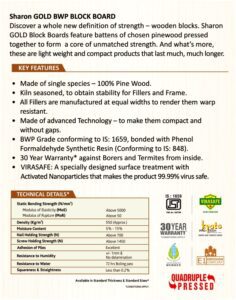
Performance depends on the treatment process, the plywood construction and compliance with recognised testing standards. Results can vary between products and manufacturers.
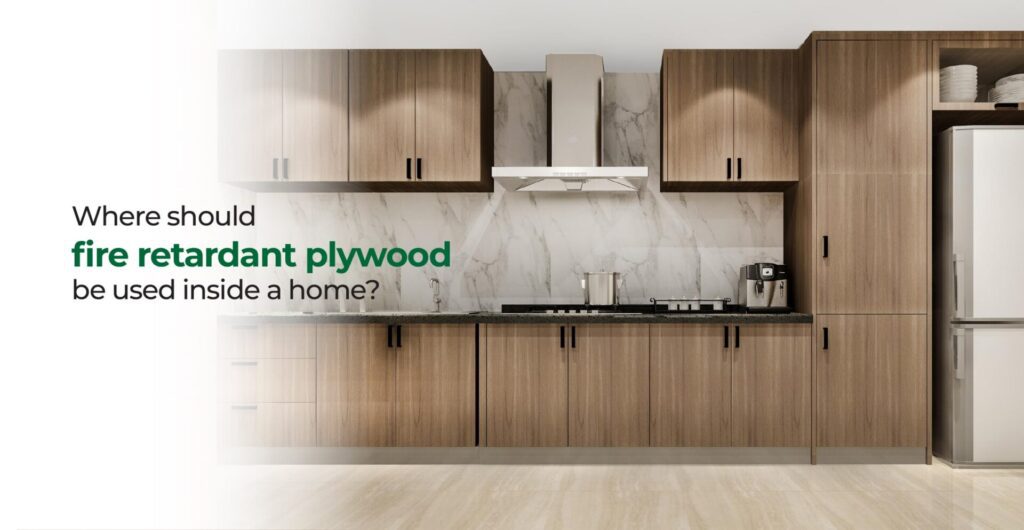
Kitchens are one of the most practical areas for fire retardant plywood.
Open flames, heat-generating appliances and electrical loads come together in a confined space. Cabinetry, loft storage and internal partitions in kitchens are exposed to higher risk compared to other rooms.
In practical use, fire retardant plywood is often specified for cabinet carcasses, loft shutters and utility enclosures. It helps slow flame spread if a fire starts due to a cooking-related incident.
However, moisture resistance must also be considered. Kitchens experience humidity and water exposure. Fire retardant treatment alone is not enough. The plywood must also be suitable for moist conditions.
This is where material choice matters. Fire performance and moisture performance need to be balanced, not treated separately.
Electrical panels inside homes are another high-risk zone that is frequently overlooked.
Distribution boards, inverter units and concealed wiring spaces generate heat during operation. Poor ventilation or faulty connections can lead to ignition.
Using fire retardant plywood for enclosures, backing panels or cabinetry around these areas helps reduce the speed at which fire can spread to surrounding interiors.
In practical use, carpenters and electricians often work in tight spaces here. Proper fixing, adequate clearances and ventilation openings remain critical. Fire retardant plywood supports safety, but it does not compensate for poor electrical planning.
Bedrooms are not obvious fire-risk areas, but they are critical from a safety perspective.
Wardrobes, bed back panels and storage units are often located along escape paths. In the event of a fire elsewhere in the home, the behaviour of these materials matters.
Fire retardant plywood is sometimes specified for wardrobe carcasses or paneling near exits. The intent is not to stop fire, but to slow its spread along circulation routes.
Over time, this becomes noticeable in multi-storey homes where staircases and corridors connect private spaces to exits.
That said, using fire retardant plywood throughout a bedroom is not always necessary. Application should be selective and based on layout and risk exposure.
Living rooms often combine multiple ignition sources. Electrical equipment, lighting systems and decorative finishes come together.
Media units house televisions, amplifiers, routers and concealed wiring. Heat build-up behind panels is common, especially when ventilation is poor.
Using fire retardant plywood for media unit carcasses and backing panels can improve safety margins. It reduces the likelihood of rapid flame spread if an electrical fault occurs.
Finish compatibility matters here. Fire retardant treatment can affect how laminates and veneers bond. Proper surface preparation and adhesive selection are important to avoid delamination later.
Staircases are critical escape routes. Material behaviour here directly impacts evacuation safety.
In duplex homes and villas, plywood is often used for stair cladding, risers or under-structure enclosures. Fire retardant plywood helps limit flame spread along vertical paths.
This is especially relevant in open stair designs, where fire can travel quickly between levels.
Installation quality plays a large role. Gaps, exposed edges and poor fixing reduce effectiveness. Attention to detailing improves real-world performance.
False ceilings hide services such as wiring, air-conditioning ducts and lighting fixtures. These concealed spaces are common ignition points.
Fire retardant plywood is sometimes used as backing for ceiling systems, access panels or service enclosures. It supports fixtures better than gypsum alone and improves fire behaviour.
In practical use, moisture and heat both affect ceiling performance. Selecting the right plywood grade and ensuring proper ventilation reduces long-term issues.
Most projects overlook this step. Access panels are often made from leftover material, without considering fire performance.
Lofts and storage units accumulate combustible material over time. They are rarely accessed and often poorly ventilated.
Fire retardant plywood is a sensible choice for loft shutters, internal partitions and storage enclosures, especially in kitchens and corridors.
Long-term maintenance habits also matter. Overloading storage units increases stress on panels and fixings. Fire retardant properties do not compensate for structural misuse.
Fire retardant plywood costs more than standard plywood. This is a practical reality.
Using it everywhere inside a home is rarely necessary. Strategic use delivers better value. Identifying higher-risk zones allows for targeted specification.
Another consideration is availability and handling. Fire retardant treated panels require proper storage and cutting practices to maintain performance. Skilled workmanship matters.
Performance also depends on certification and testing. Compliance with recognised fire test standards provides a clearer understanding of expected behaviour.
Climate influences fire risk differently across regions. Dry conditions increase ignition potential, while humidity affects material ageing.
Fire retardant treatment performance can vary with exposure conditions. This is why specifications should consider local environment and usage patterns.
Reduced flame spread does not mean reduced maintenance. Fire retardant plywood still needs protection from moisture and mechanical damage.
Fire safety inside homes is not about eliminating risk. It is about managing it responsibly.
Fire retardant plywood plays a specific role. It is most effective when used in areas with higher ignition potential or along critical escape paths. It works best as part of a broader safety approach that includes electrical planning, ventilation and good installation practices.
At SharonPly, the focus has always been on matching plywood performance to real interior conditions. Fire retardant plywood is one such solution, designed to improve safety where it matters most. When specified thoughtfully and used in the right locations, it contributes to homes that are safer, more resilient and better prepared for unexpected situations.
The takeaway is straightforward. Use fire retardant plywood selectively and intentionally. Understand its role, respect its limits and integrate it into interior planning with clarity and confidence.










Users understand that SHARONPLY is committed to protecting the User’s privacy and shall take all efforts to protect any personal data provided to the Website by reasonable security safeguards against such risks as loss or unauthorised use, destruction, modification or disclosure of data, However, in case of any lapse, SHARONPLY shall not be held responsible for any effect or consequences thereof. The Website uses cookies to track usage of the path of the User. Since most web browsers automatically accept cookies, User can edit User’s browser options to block them if User does not want the Website to use cookies to track usage of the path of the User.
SHARONPLY undertakes not to disclose, except as otherwise provided, the personal information provided by the User to any person, unless such action is necessary to: –
By filling up any form on the Website User automatically grants SHARONPLY a royalty-free, perpetual, irrevocable non-exclusive license to use, reproduce, publish, edit, distribute, and publicly display the information given in the form and to sublicense such rights.
Any queries regarding the SHARONPLY’s privacy policy, may be sent to admin@sharonply.com.