
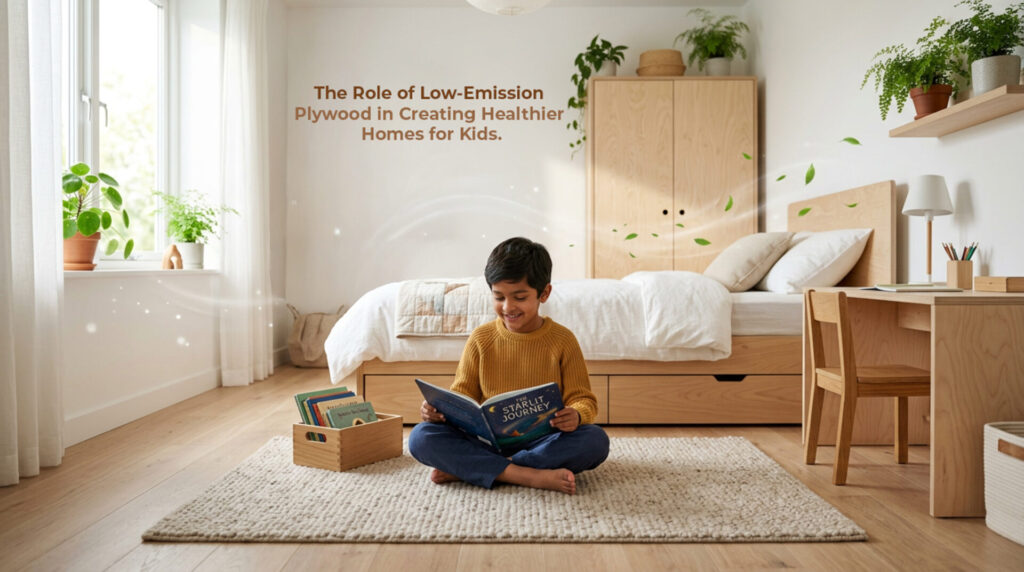
When designing a home for children, most parents focus on visible safety measures. Rounded furniture edges, secure electrical fittings, non-slip flooring and child-friendly layouts often receive the most attention. While these features are undoubtedly important, another aspect of a healthy home is often overlooked: indoor air quality.
Children spend a significant portion of their time indoors, especially during their early years. Their bedrooms, study areas, play spaces and living rooms become the environments where they learn, grow and spend much of their daily life. The materials used in these spaces can influence the quality of the air they breathe every day.
As awareness around healthier living continues to grow, more homeowners, architects and interior designers are paying attention to the materials used behind furniture and interior finishes. Low-emission plywood has become an important consideration because it helps reduce indoor pollutant levels while continuing to deliver the strength and durability expected from quality plywood.
Table of Contents
Low-emission plywood is manufactured using adhesive systems designed to release lower levels of volatile organic compounds (VOCs) and formaldehyde compared to conventional alternatives.
Plywood is produced by bonding multiple layers of wood veneer under heat and pressure. The adhesive used during this process plays a major role in determining the emission profile of the finished board.
To help measure and regulate emissions, manufacturers often classify plywood according to standards such as E1 and E0. These classifications indicate the amount of formaldehyde released under controlled testing conditions.
Lower-emission products contribute less to the overall concentration of indoor airborne pollutants, making them a preferred choice for residential interiors where long-term indoor comfort is a priority.
Children have different environmental needs than adults. Their bodies are still developing, and they generally breathe more air relative to their body weight. They also tend to spend more time indoors, whether sleeping, studying or playing.
Because of this, the quality of indoor air becomes particularly important.
Modern interiors contain a wide range of materials that may contribute to indoor emissions, including:
Individual material may comply with safety standards, but when multiple products are used throughout a home, their combined contribution becomes worth considering.
Choosing lower-emission materials is one way to reduce the overall emission load within indoor spaces and support a healthier living environment.
Formaldehyde is commonly used in certain wood adhesives because it provides strong and durable bonding performance. Its use has played an important role in the manufacture of engineered wood products for many years.
The focus today is not simply on whether formaldehyde is present, but on controlling how much is released into indoor air over time. This is why emission standards have become an important part of material selection.
E1-grade plywood is widely accepted for interior applications because it maintains emissions within prescribed limits. E0-grade products generally aim for even lower emission levels, depending on the testing standards used.
For homeowners evaluating plywood options, appearance alone rarely tells the full story. A finished wardrobe or study table may reveal little about the quality of the materials beneath the surface. Reviewing product specifications and certifications can provide a clearer understanding of how the board is likely to perform.
A common misconception is that reducing emissions means compromising on strength or durability.
In reality, these are separate characteristics.
The structural performance of plywood depends on factors such as veneer quality, core construction, adhesive technology and manufacturing standards. Modern adhesive systems have evolved considerably and can deliver both strong bonding performance and reduced emission levels.
As a result, low-emission plywood is available across various grades, including moisture-resistant and waterproof variants suitable for different interior applications.
For homeowners, this means it is possible to prioritize healthier indoor environments without sacrificing the performance expected from quality plywood.
When planning a child’s room, parents often focus on colours, themes, furniture styles and storage solutions. While these choices help create a comfortable and engaging space, the materials used to build the furniture deserve equal consideration.
Wardrobes, study tables, bookshelves, toy storage units and wall-mounted cabinets all rely on wood-based panels. These are items children interact with every day and are likely to remain in the room for many years.
Selecting low-emission plywood during the construction or renovation stage allows potential concerns to be addressed before the furniture is installed. Making thoughtful material choices early in the process is often simpler and more effective than attempting to make changes later.
Indoor air quality is only one aspect of creating a comfortable living space. Moisture management is equally important.
When plywood is exposed to excessive moisture, it may swell, warp or lose dimensional stability. Damp conditions can also contribute to mould growth, which can negatively affect indoor environments.
This is particularly relevant in regions with high humidity levels or prolonged monsoon seasons. Children’s rooms located near bathrooms, balconies or poorly ventilated areas may require additional attention during material selection.
For such applications, homeowners should consider plywood that combines low-emission characteristics with appropriate moisture resistance. A balanced approach helps support both durability and indoor comfort over the long term.
Not all low-emission plywood products perform in the same way.
The effectiveness of a low-emission board depends heavily on manufacturing quality and process control. Factors such as veneer seasoning, adhesive application, pressing conditions and quality inspection all influence the final product.
Professionals typically evaluate plywood based on a combination of characteristics rather than focusing on a single specification. Emission standards, bonding quality, structural integrity and moisture resistance all contribute to overall performance.
A well-manufactured product delivers a better balance of durability, reliability and indoor environmental quality.
Even high-quality plywood requires proper handling and installation to achieve the intended outcome.
The adhesives used during furniture fabrication, edge banding materials and finishing products can all contribute to the overall indoor environment. Careful installation helps preserve the performance of the materials selected during the design stage.
Plywood should be stored in dry conditions and protected from excessive moisture before installation. Proper handling helps maintain dimensional stability and ensures the product performs as expected once incorporated into furniture and interiors.
Attention to these details can make a meaningful difference in long-term results.
Low-emission plywood may sometimes involve a higher upfront investment compared to standard alternatives.
However, interior materials are typically long-term purchases. Wardrobes, study units, storage systems and cabinetry often remain in use for many years, making their performance more important than short-term cost differences.
When viewed across the lifespan of the furniture, the additional investment often represents a relatively small portion of the overall project budget.
For families who prioritize indoor comfort and healthier living spaces, the long-term value extends beyond simple financial calculations.
No single material can define the health of an indoor environment.
Ventilation, natural airflow, paint selection, furnishing materials and regular maintenance all contribute to the quality of a living space. Low-emission plywood should therefore be viewed as one component of a broader strategy aimed at creating healthier interiors.
When combined with thoughtful design decisions and responsible material selection throughout the home, it can play a valuable role in supporting better indoor environments for both children and adults.
Creating a healthy home often begins with decisions that are made long before furniture is installed or rooms are occupied. The materials chosen during construction and interior planning can influence comfort, durability and indoor environmental quality for years to come.
Low-emission plywood offers an effective way to reduce indoor pollutant levels while maintaining the strength, stability and versatility expected from quality plywood. When paired with appropriate moisture resistance, proper installation practices and good ventilation, it contributes to living spaces that are both durable and comfortable.
At SharonPly, years of experience across residential interiors have reinforced the importance of balancing performance with well-being. Thoughtful material selection helps create homes that not only last longer but also support healthier everyday living for growing families.


Users understand that SHARONPLY is committed to protecting the User’s privacy and shall take all efforts to protect any personal data provided to the Website by reasonable security safeguards against such risks as loss or unauthorised use, destruction, modification or disclosure of data, However, in case of any lapse, SHARONPLY shall not be held responsible for any effect or consequences thereof. The Website uses cookies to track usage of the path of the User. Since most web browsers automatically accept cookies, User can edit User’s browser options to block them if User does not want the Website to use cookies to track usage of the path of the User.
SHARONPLY undertakes not to disclose, except as otherwise provided, the personal information provided by the User to any person, unless such action is necessary to: –
By filling up any form on the Website User automatically grants SHARONPLY a royalty-free, perpetual, irrevocable non-exclusive license to use, reproduce, publish, edit, distribute, and publicly display the information given in the form and to sublicense such rights.
Any queries regarding the SHARONPLY’s privacy policy, may be sent to admin@sharonply.com.