
Plywood is known for its strength, dimensional stability, and longevity. All these features result from the specific way the material is constructed, that is, several layers of wood veneer glued together. When the layers are still intact, plywood is a reliable material for various interior uses.
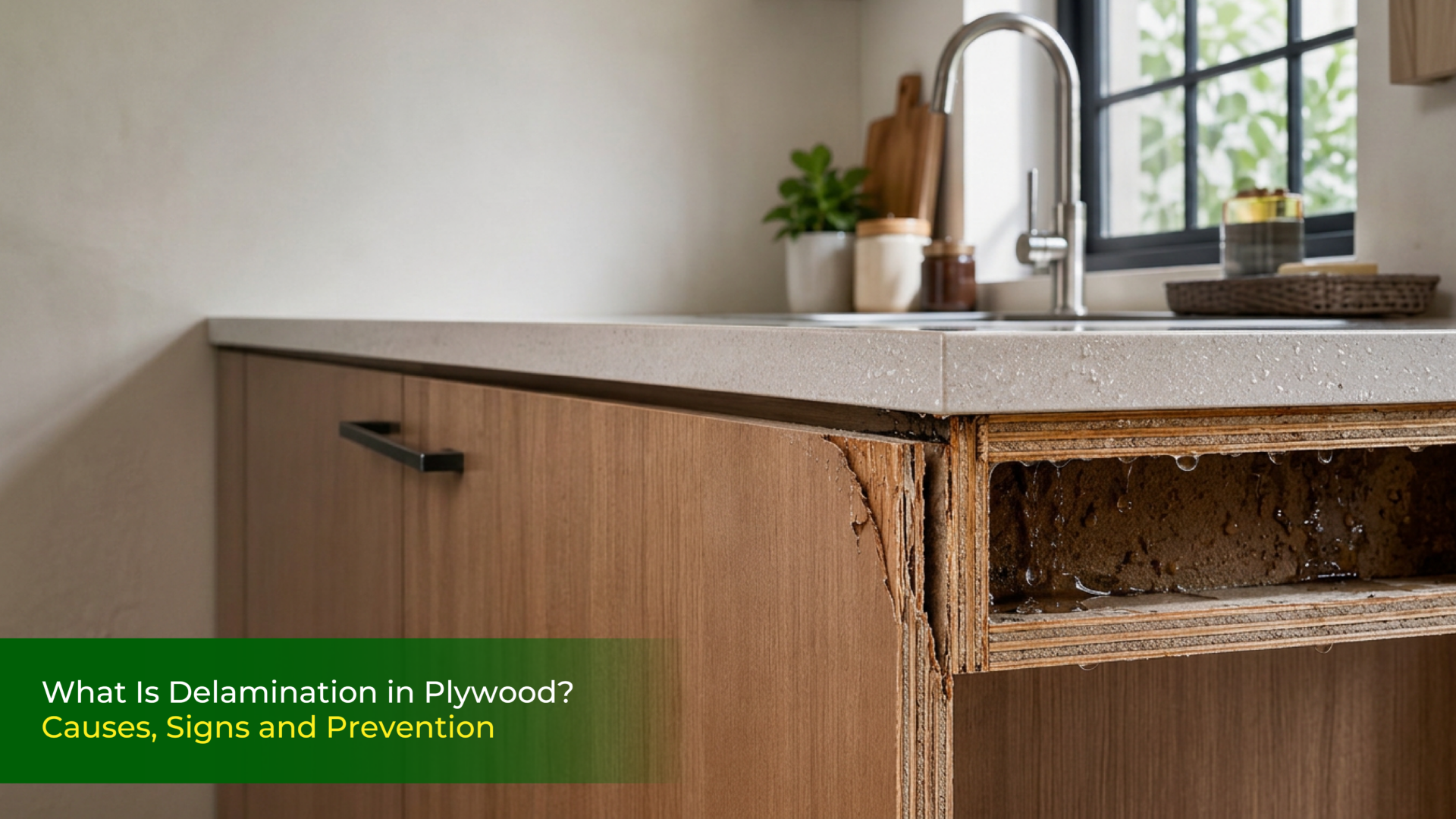
However, when the connection of veneer layers starts deteriorating, the plywood becomes prone to delamination, which is the separation of the plywood layers.
The delamination of plywood is one of the most frequent causes of plywood damage. It influences the plywood performance, appearance, and longevity. Learning more about it is important for homeowners, carpenters, and interior designers.
Delamination refers to the separation of one or more veneer layers within a plywood sheet because the adhesive bond has weakened or failed.
Unlike surface scratches or edge damage, delamination occurs inside the board. The plywood gradually loses its structural integrity as the layers begin to separate.
The problem may appear as small gaps along the edges initially. Over time, the separation can spread further across the panel if the underlying cause is not addressed.
This is where material choice matters. The quality of bonding during manufacturing plays a major role in preventing delamination.
Delamination rarely happens for a single reason. It is usually the result of multiple factors working together.
Some of the most common causes include:
The adhesive used to bond plywood veneers determines how well the layers remain connected under stress.
If insufficient adhesive is applied, or if the pressing temperature, pressure or curing time is not properly controlled, weak bond lines may develop.
In practical use, these weak areas become vulnerable when exposed to moisture or repeated loading.
Quality manufacturing processes are essential for producing durable plywood.
Excessive moisture remains one of the leading causes of delamination.
When water enters through unsealed edges, damaged laminates or leaking plumbing, it can weaken the adhesive bond over time.
MR-grade plywood is intended for relatively dry interior environments. Waterproof plywoods manufactured using BWP-grade bonding systems offer better resistance where prolonged moisture exposure is expected.
However, no plywood should remain continuously wet.
Proper installation and maintenance remain equally important.
Even high-quality plywood can absorb unwanted moisture if stored improperly.
Boards stacked directly on damp floors or exposed to rain before installation may begin absorbing moisture long before fabrication starts.
Over time, this becomes noticeable as dimensional changes place additional stress on the bonded veneer layers.
Storing plywood on raised platforms in dry, ventilated spaces helps preserve its performance.
Quality of workmanship is also an important factor affecting longevity.
Poor edge sealing, faulty screwing and too much cutting without proper finishing allows water entry through cracks.
Likewise, incorrect choice of plywood meant for particular use results in early failure of plywood.
Early identification often prevents further damage.
Some common warning signs include:
In practical use, these signs usually develop gradually rather than appearing overnight.
Routine inspection of kitchen cabinets, wardrobes and furniture near moisture sources helps detect problems early.
Not necessarily.
Many people assume every case of delamination indicates poor manufacturing.
While manufacturing quality is certainly important, environmental conditions and site practices also influence plywood performance.
For example:
Each of these can contribute to bond failure over time.
A balanced approach would give the right result, rather than thinking about only one factor.
There are various grades of plywood for various purposes.
MR grade plywood can prove to be quite effective for furniture in a dry indoor environment.
Waterproof plywoods that comply with standards like IS 710 will work better than MR grade for places like kitchens or utility rooms because they are made with phenol formaldehyde resins.
Choosing the right grade of plywood is essential to prevent failure in moisture resistance.
Bonding quality alone cannot guarantee long-term performance.
The internal core structure also contributes to plywood stability.
Well-constructed plywood typically features:
These characteristics improve dimensional stability while reducing internal stresses that may eventually contribute to separation.
This is one reason why professionally manufactured plywood generally delivers more consistent long-term performance.
Delamination prevention starts well before installation.
The following tips may prove useful:
These small efforts will help keep the bond intact. Good maintenance complements good manufacturing.
Plywood performance is influenced by much more than adhesive quality alone.
Climate, humidity, furniture design, workmanship, maintenance and daily usage all affect long-term durability.
In India’s varied climatic conditions, particularly in coastal and monsoon-prone regions, moisture management becomes especially important.
When appropriate plywood grades are combined with proper storage, careful installation and routine maintenance, the risk of delamination can be significantly reduced.
Delamination is one of the most common forms of plywood deterioration, but it is also one of the most preventable. Understanding how bonding quality, moisture exposure, storage conditions and installation practices interact allows homeowners and professionals to make better decisions from the beginning.
Selecting the appropriate plywood grade for each application, especially waterproof plywoods in moisture-prone areas, plays an important role in maintaining long-term structural performance. Equally important are careful site handling and proper workmanship.
Many years of SharonPly experience in India proved that good interior materials are the result of proper production and right application of these materials. When plywood is chosen thoughtfully and handled correctly, it continues to deliver dependable performance for many years.







Users understand that SHARONPLY is committed to protecting the User’s privacy and shall take all efforts to protect any personal data provided to the Website by reasonable security safeguards against such risks as loss or unauthorised use, destruction, modification or disclosure of data, However, in case of any lapse, SHARONPLY shall not be held responsible for any effect or consequences thereof. The Website uses cookies to track usage of the path of the User. Since most web browsers automatically accept cookies, User can edit User’s browser options to block them if User does not want the Website to use cookies to track usage of the path of the User.
SHARONPLY undertakes not to disclose, except as otherwise provided, the personal information provided by the User to any person, unless such action is necessary to: –
By filling up any form on the Website User automatically grants SHARONPLY a royalty-free, perpetual, irrevocable non-exclusive license to use, reproduce, publish, edit, distribute, and publicly display the information given in the form and to sublicense such rights.
Any queries regarding the SHARONPLY’s privacy policy, may be sent to admin@sharonply.com.