
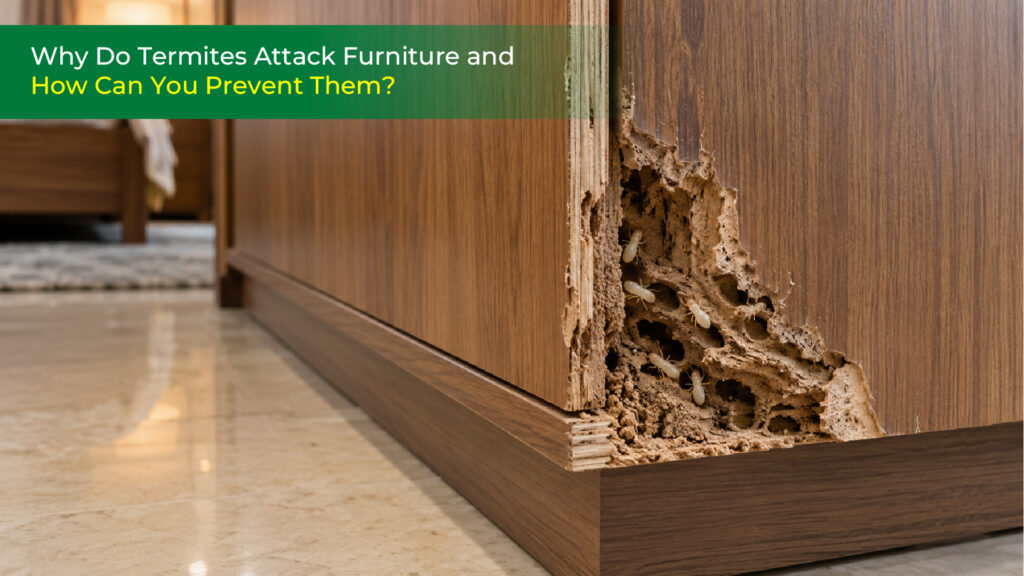
Termite damage is one of the most frustrating problems in wooden furniture. It can begin quietly inside cabinets, wardrobes, beds or storage units and become visible only after the damage has progressed.
In India, termites can be a concern across many regions, particularly where soil moisture, humidity, poor ventilation or wood-to-ground contact create favourable conditions. But termites do not attack furniture simply because it is made of wood. Several factors influence whether a furniture system becomes vulnerable.
Understanding these factors helps homeowners make better material choices and maintain furniture more effectively.
Termites feed primarily on cellulose, a structural component found in wood and other plant-based materials. Furniture therefore provides a potential food source, especially when wood or wood-based materials are accessible.
However, the presence of wood alone does not explain every infestation. Moisture, cracks, gaps, concealed areas and contact with infested soil can all influence termite activity.
Furniture installed close to damp walls or floors may face additional risk. Poorly ventilated areas can also create conditions that allow moisture to remain for longer periods.
This is where material choice matters, but so does the environment around the furniture.
Moisture does not cause termites by itself, but damp conditions can make an environment more favourable to termite activity and can also weaken wood-based materials over time.
Kitchen sink units, bathroom storage, utility cabinets and furniture placed against damp walls deserve particular attention. Water leakage from plumbing, seepage through walls and poorly sealed edges can keep parts of a furniture unit damp.
Plywood selected for moisture-prone applications can help reduce moisture-related deterioration. Waterproof ply woods and other suitable moisture-resistant grades are designed for applications where exposure to humidity or occasional moisture is expected.
However, moisture-resistant plywood is not a substitute for fixing a leaking pipe or addressing wall dampness.
Yes, but termite resistance and moisture resistance are two different considerations.
A plywood grade is primarily selected according to the conditions in which it will be used. For example, areas exposed to greater moisture may require a more suitable moisture-resistant or BWP-grade plywood.
Termite protection, meanwhile, depends on the construction and treatment of the material, as well as the surrounding environment.
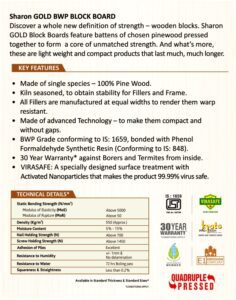
Some plywood products are manufactured with treatments or technologies intended to provide resistance against termites and other wood-damaging organisms. When considering such products, buyers should look for documented product specifications, testing information and applicable warranties rather than relying only on general claims.
Furniture edges, joints and concealed areas deserve attention because they can be more exposed than the finished face of a panel.
During fabrication, plywood is cut, drilled and joined. These processes can expose internal layers or create small gaps around fittings. Proper edge finishing and careful installation help protect vulnerable areas.
This is particularly important around kitchen sink units, floor-level cabinets and other locations where moisture may occasionally reach the furniture.
Good workmanship cannot prevent every termite infestation, but it can reduce avoidable vulnerabilities in the furniture system.
The internal construction of plywood matters for overall furniture performance.
Plywood comprises layers of wood veneers bonded together. Consistent veneer quality, proper bonding and a well-constructed core contribute to the stability of the finished panel.
Termite protection, where provided as part of a product, is a separate characteristic and should be assessed based on the manufacturer’s stated treatment or testing.
This distinction is important. A strong plywood panel is not automatically termite-resistant, and termite-resistant material should not automatically be assumed to be suitable for every application.
In practical use, material properties need to match the conditions in which the furniture will operate.
Furniture can sometimes become affected by termite activity originating elsewhere in a building.
Termites may move through soil, cracks, concealed building spaces or other pathways before reaching wooden furniture. In such situations, treating only the affected cabinet may not address the source.
Signs such as mud tubes, damaged wood, discarded wings or recurring termite activity should therefore be investigated rather than simply covered up.
For an established infestation, professional pest-control assessment may be necessary. The appropriate treatment depends on the termite species, infestation location and construction of the building.
Prevention begins with reducing conditions that allow termite activity to persist.
Keep furniture away from persistent dampness and address plumbing leaks quickly. Avoid allowing water to collect around floor-level cabinets. Maintain ventilation in wardrobes, kitchens and storage areas.
During installation, ensure exposed plywood edges are properly finished and that joints are handled carefully. Furniture should also be kept slightly clear of known damp surfaces wherever the design allows.
Site storage matters as well. Plywood sheets should be stored flat, away from wet floors and protected from rain and excessive humidity. Damaged or repeatedly exposed sheets should not be treated as equivalent to properly stored material.
Regular inspection is useful, especially in older furniture and moisture-prone areas.
No material choice should be treated as a guarantee against every termite problem.
Anti-Termite plywood can add an important layer of protection when its treatment and specifications are appropriate for the application. But a building can still have termite activity through soil, walls, flooring or other wood-based materials.
That is why termite management works best as a combination of suitable materials, good construction practices, moisture control and regular inspection.
Over time, this becomes noticeable in the way furniture performs and how early potential problems are identified.
Instead of choosing plywood based only on price or thickness, consider the conditions in which the furniture will be used.
For termite-prone locations, check whether the product offers documented termite or borer protection and understand what the stated warranty covers. For kitchens, utility areas and other moisture-prone spaces, consider the appropriate moisture-resistant grade as well.
Also look at core construction, bonding quality, applicable standards, test information and the reputation of the manufacturer.
A good material decision considers the complete furniture application rather than one specification in isolation.
Termites are drawn to wood-based materials, but moisture, entry points, construction quality and maintenance often determine the level of risk.
Choosing plywood with documented termite protection is an important first step. Proper edge sealing, moisture control, careful installation and regular pest inspections provide added protection.
Built on a long-standing legacy in plywood manufacturing, SharonPly understands that lasting termite protection depends on more than one feature. The right plywood must suit the application, climate and conditions of use, supported by proper installation and care.





Users understand that SHARONPLY is committed to protecting the User’s privacy and shall take all efforts to protect any personal data provided to the Website by reasonable security safeguards against such risks as loss or unauthorised use, destruction, modification or disclosure of data, However, in case of any lapse, SHARONPLY shall not be held responsible for any effect or consequences thereof. The Website uses cookies to track usage of the path of the User. Since most web browsers automatically accept cookies, User can edit User’s browser options to block them if User does not want the Website to use cookies to track usage of the path of the User.
SHARONPLY undertakes not to disclose, except as otherwise provided, the personal information provided by the User to any person, unless such action is necessary to: –
By filling up any form on the Website User automatically grants SHARONPLY a royalty-free, perpetual, irrevocable non-exclusive license to use, reproduce, publish, edit, distribute, and publicly display the information given in the form and to sublicense such rights.
Any queries regarding the SHARONPLY’s privacy policy, may be sent to admin@sharonply.com.