

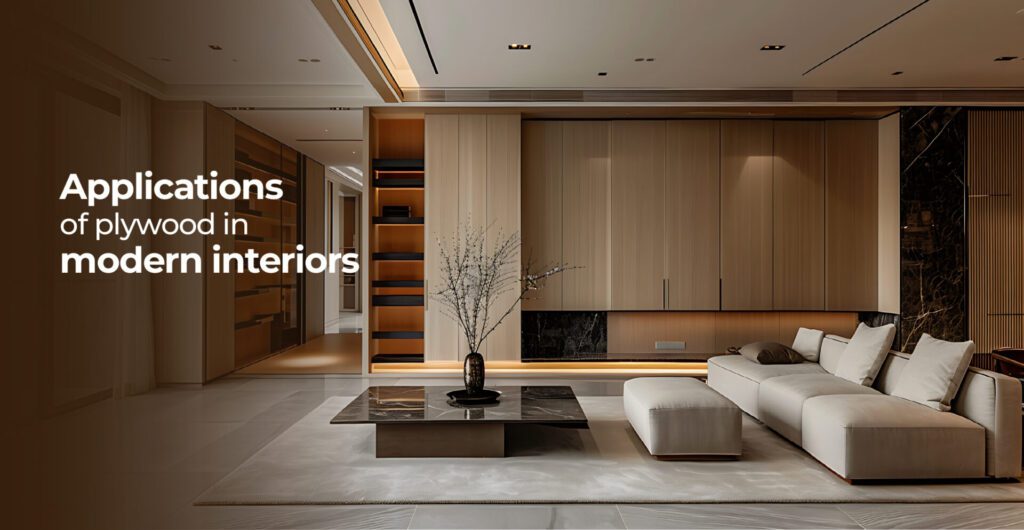
Modern interiors are all about the balance of beauty, function, and sustainability. Among the many materials that bring this harmony to life, plywood stands out as a silent yet essential hero. Once considered purely structural, it has evolved into one of the most versatile and design-friendly materials for today’s homes, offices, and retail spaces.
From elegant wall panels to bespoke furniture, plywood is shaping the way interiors look and feel. Let’s explore how this material has found its place in every corner of modern design.
Table of Contents
When it comes to furniture, plywood is a designer’s delight. Unlike solid wood, which can be heavy and expensive, plywood offers strength, flexibility, and a smooth finish that suits both minimal and luxury interiors. For guidance on selecting the right options, check out our plywood buying guide.
Modern homes demand furniture that adapts to lifestyle changes. Plywood makes this possible with its lightweight and structural stability. It’s ideal for modular kitchens, wardrobes, and shelving systems where precision and durability are key. Designers appreciate how easily it can be cut, shaped, and laminated into sleek, contemporary forms.
Available in different veneers and finishes, plywood allows you to achieve natural wood textures, glossy laminates, or painted surfaces without compromising strength. Whether you want a Scandinavian-style dining table or a modern storage unit, plywood fits seamlessly into almost any design palette.
Interior walls and ceilings have transformed from simple backgrounds into expressive design elements. Plywood plays a major role in this shift.
Architects often use veneered or grooved plywood panels to create accent walls that bring depth and warmth to living spaces. Its grain patterns and tones add organic beauty, while the surface can be polished, stained, or painted to match any interior concept.
In office and entertainment spaces, plywood ceiling panels are used not just for their aesthetics but also for acoustic benefits. They help absorb sound, reduce echo, and add a refined, natural finish to the overhead space, which is a combination that few materials achieve so effortlessly.
Moisture-resistant grades of plywood have revolutionized the way we design kitchens and bathrooms.
For kitchen interiors, making the right choice between BWP vs BWR Plywood is crucial, as these grades are preferred for their ability to withstand humidity, steam, and heat. They provide the backbone for cabinets, drawers, and under-sink storage, ensuring that your kitchen looks elegant while lasting years without warping or peeling.
Bathrooms once avoided wood completely, but today, plywood with waterproof coatings brings warmth and style to vanity units and shelves. Paired with laminates or veneers, these units add a natural touch even in damp conditions.
Modern spaces often blur the lines between rooms while maintaining privacy and sound insulation. Plywood doors and partitions make this possible.
Solid-core plywood doors are not only durable but also far more affordable than hardwood options. They can be veneered, laminated, or painted to blend with the overall décor. With the right finish, they offer a premium look and excellent resistance to wear and tear, which is perfect for high-traffic areas.
For open-plan layouts, plywood partitions provide lightweight yet strong separation. Designers can easily integrate shelving or decorative cutouts into these dividers, enhancing both form and function.
While solid wood flooring remains a premium choice, engineered plywood flooring is rapidly gaining popularity. It offers the same warmth and grain pattern as hardwood, but with better stability and moisture resistance.
Plywood’s layered structure makes it less prone to expansion or contraction with changes in temperature and humidity. This makes it an excellent choice for Indian climates, where seasonal variations can otherwise damage solid wood floors. Additionally, it supports various finishes, from matte and textured to glossy, allowing homeowners to achieve their desired aesthetic without compromising durability. With proper guidance on the installation, you can install plywood flooring like a professional.
Beyond homes, plywood is a favorite in commercial, retail, and office interiors for its clean lines, strength, and adaptability.
Workspaces today require furniture that’s both functional and design-forward. Plywood workstations provide structural rigidity for desks and storage units, while their sleek edges and laminate surfaces maintain a modern aesthetic.
Retail and hospitality spaces often need custom fixtures that look appealing and last under constant use. Plywood can be curved, layered, or CNC-cut into creative forms for display racks, counters, and backdrops, ensuring both durability and design flexibility.
Sustainability is no longer optional in design, but it’s essential. Plywood contributes positively to eco-friendly interiors in several ways.
By choosing sustainable plywood products, homeowners and designers actively reduce their carbon footprint while creating interiors that feel warm, natural, and enduring.
Designers and architects are constantly experimenting with plywood beyond its conventional uses.
These creative applications highlight plywood’s adaptability, making it a true all-rounder in the world of design.
The modern interior is a story of innovation. It is an innovation of materials that look good, perform better, and endure through time. Plywood, with its perfect blend of strength, style, and sustainability, has earned its place at the heart of this evolution. From kitchen cabinets to luxury panels, its applications continue to grow with every design trend. As design moves toward smarter, greener spaces, brands like SharonPly are leading the way with advanced plywood solutions engineered for modern living. Crafted with precision and responsibility, our products bring together the aesthetics of natural wood and the reliability of cutting-edge technology while helping designers and homeowners build interiors that are not only beautiful but built to last.







Users understand that SHARONPLY is committed to protecting the User’s privacy and shall take all efforts to protect any personal data provided to the Website by reasonable security safeguards against such risks as loss or unauthorised use, destruction, modification or disclosure of data, However, in case of any lapse, SHARONPLY shall not be held responsible for any effect or consequences thereof. The Website uses cookies to track usage of the path of the User. Since most web browsers automatically accept cookies, User can edit User’s browser options to block them if User does not want the Website to use cookies to track usage of the path of the User.
SHARONPLY undertakes not to disclose, except as otherwise provided, the personal information provided by the User to any person, unless such action is necessary to: –
By filling up any form on the Website User automatically grants SHARONPLY a royalty-free, perpetual, irrevocable non-exclusive license to use, reproduce, publish, edit, distribute, and publicly display the information given in the form and to sublicense such rights.
Any queries regarding the SHARONPLY’s privacy policy, may be sent to admin@sharonply.com.