

In many Indian homes, moisture is not limited to bathrooms or kitchens. It travels through the air, settles on surfaces and builds up over time. This is especially true in coastal regions and cities with high humidity.
Interior materials are expected to handle these conditions without losing strength or stability. This is where waterproof plywoods are often considered.
However, the role of waterproof plywood goes beyond resisting water. It supports the structural integrity of interiors and helps maintain their performance over time. Understanding how this works makes it easier to use the material effectively.
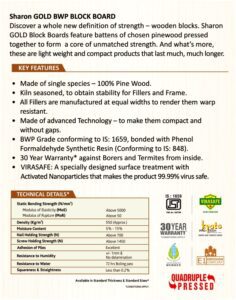
Waterproof plywood generally refers to BWP grade plywood, manufactured using phenol-formaldehyde adhesives. These adhesives form strong, stable bonds between veneers and resist breakdown even when exposed to moisture.
In India, BWP plywood is tested under IS 710 standards. These tests simulate prolonged exposure to boiling water to check bonding strength.
It is important to understand that waterproof refers to bonding performance, not complete immunity to water damage. Like any wood-based material, plywood still requires proper finishing and installation.
Moisture enters interiors in different ways. Steam from cooking, water splashes, leaks, and even ambient humidity contribute to gradual absorption.
Wood fibers naturally expand when they absorb moisture and shrink when they dry. In plywood, this movement is controlled by cross-layered construction, but it cannot be eliminated entirely.
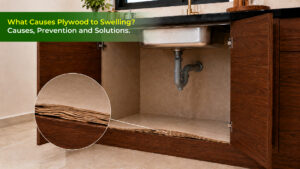
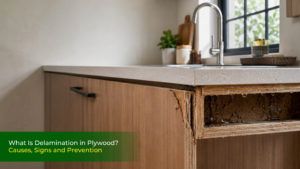
When bonding is weak or inconsistent, moisture causes layers to separate. Over time, this leads to swelling, surface deformation and reduced strength.
This is where material choice matters.
Waterproof plywood helps maintain structural stability by resisting bond failure in humid or wet conditions.
In practical use, this means cabinets hold their shape, shelves remain level and doors continue to align properly. The internal layers stay intact even when exposed to varying moisture levels.
Over time, this becomes noticeable in areas where standard plywood may show signs of wear earlier.
However, stability also depends on thickness, support and installation quality. Even high-grade plywood requires proper design and fixing.
Kitchens are one of the primary areas where waterproof plywood is used. Steam, regular cleaning and plumbing connections create constant exposure to moisture.
Using waterproof plywood in base cabinets and under-sink units reduces the risk of swelling and edge damage. It also supports longer service life in high-use areas.
Bathrooms and utility spaces present similar challenges. In these zones, waterproof plywood helps maintain surface integrity and reduces the chances of internal damage.
At the same time, good ventilation and proper sealing are equally important.
One of the key advantages of waterproof plywood is its ability to delay moisture-related deterioration.
In lower-grade plywood, repeated exposure to humidity can weaken adhesive bonds. This leads to gradual separation of layers.
Waterproof plywood, with its stronger bonding system, resists this process more effectively. It does not eliminate wear completely, but it slows it down significantly.
In practical use, this translates to fewer repairs and longer intervals between replacements.
Moisture retention in materials can lead to secondary issues such as fungal growth or surface damage.
While plywood itself is not a breeding ground, prolonged dampness in poorly bonded boards can create conditions where such issues develop.
Waterproof plywood reduces this risk by limiting moisture penetration within the layers. When combined with proper finishing and ventilation, it supports cleaner and more stable interiors.
This aspect becomes particularly important in kitchens and storage areas.
A common assumption is that waterproof plywood does not require additional protection. In reality, surface finishing remains essential.
Laminates, veneers or coatings act as barriers that reduce direct exposure to moisture. Edge sealing is equally important, as edges are more vulnerable to water absorption.
In practical use, many failures occur not because of the plywood grade, but due to unsealed edges or poor finishing.
This is where attention to detail makes a clear difference.
Even high-quality waterproof plywood can under perform if not handled correctly.
Storage on site plays a key role. Plywood should be kept away from damp floors and protected from direct moisture exposure before installation.
Carpentry practices also matter. Accurate cutting, proper joinery and correct hardware placement help maintain structural integrity.
Inconsistent workmanship often leads to gaps where moisture can enter, affecting long-term performance.
Waterproof plywood offers clear advantages, but it is not necessary for every part of an interior.
Using it selectively in moisture-prone areas such as kitchens, bathrooms and utility zones ensures effective use of material and budget.
For dry areas, other grades may perform adequately when chosen correctly.
Understanding where waterproof plywood adds value helps in making balanced decisions.
Waterproof plywood plays a supporting role in keeping interiors safe. It does not work in isolation, but as part of a system that includes design, finishing and maintenance.
When used in the right applications, it helps prevent structural issues, reduces moisture-related damage and supports long-term reliability.
With decades of experience across different climates and usage conditions, SharonPly has seen that interiors perform best when materials are chosen with clarity. Waterproof plywood is one part of that approach. When used thoughtfully and installed correctly, it contributes to interiors that remain stable, functional and dependable over time.





Users understand that SHARONPLY is committed to protecting the User’s privacy and shall take all efforts to protect any personal data provided to the Website by reasonable security safeguards against such risks as loss or unauthorised use, destruction, modification or disclosure of data, However, in case of any lapse, SHARONPLY shall not be held responsible for any effect or consequences thereof. The Website uses cookies to track usage of the path of the User. Since most web browsers automatically accept cookies, User can edit User’s browser options to block them if User does not want the Website to use cookies to track usage of the path of the User.
SHARONPLY undertakes not to disclose, except as otherwise provided, the personal information provided by the User to any person, unless such action is necessary to: –
By filling up any form on the Website User automatically grants SHARONPLY a royalty-free, perpetual, irrevocable non-exclusive license to use, reproduce, publish, edit, distribute, and publicly display the information given in the form and to sublicense such rights.
Any queries regarding the SHARONPLY’s privacy policy, may be sent to admin@sharonply.com.